
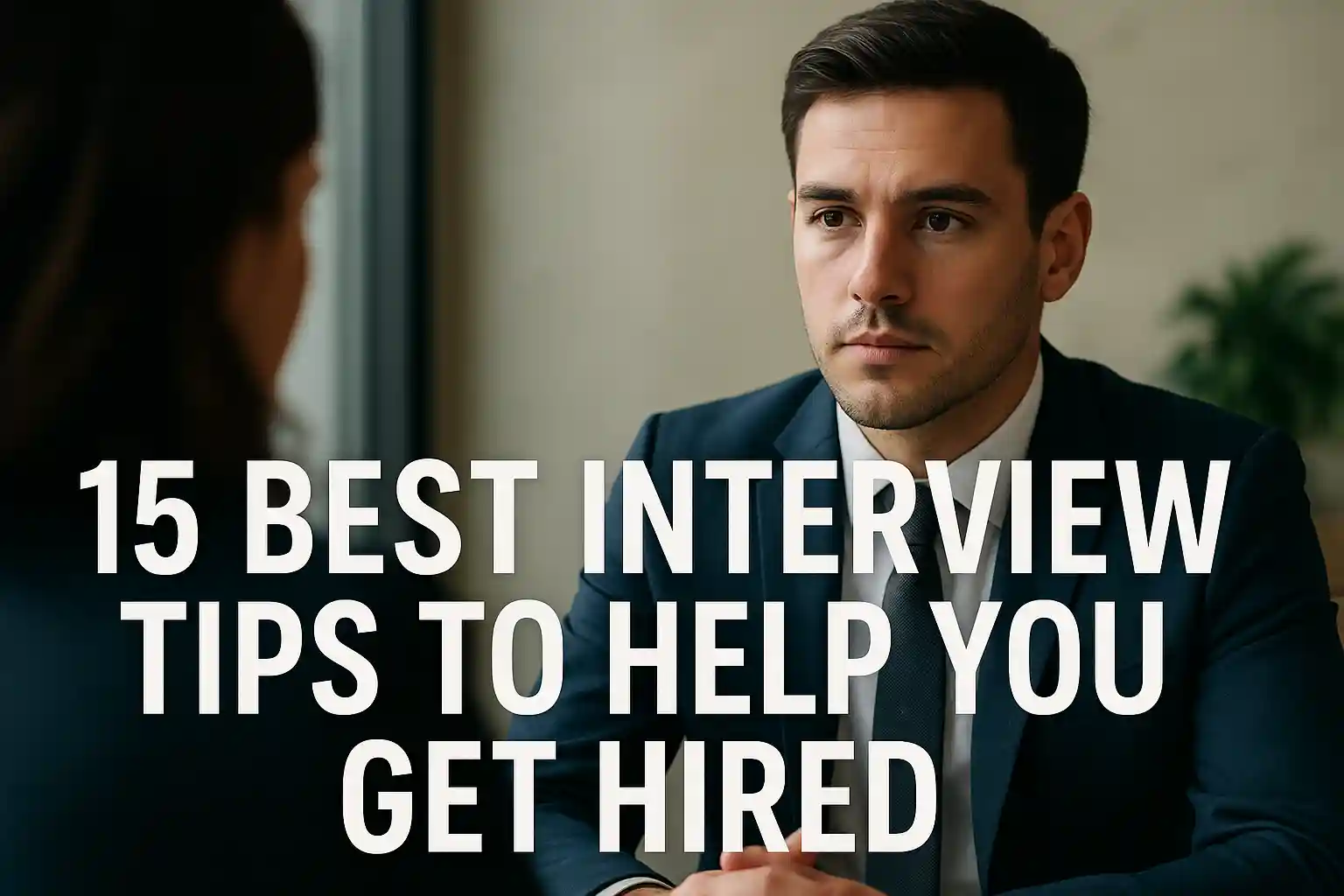
Preparing for a job interview can feel nerve-wracking, but with the right approach, you can walk in with confidence and leave a lasting impression. Below are 15 expert-backed interview tips to help you prepare, perform, and follow up like a pro.
- Kitchen Assistant Job in UK Central London | £36,000 per Year | Rhubarb Hospitality Recruitment
- Food Packing Jobs in Canada with Visa Sponsorship: Salary $21 Per Hour
- Security Guard Jobs in Luxembourg with Visa Sponsorship: Salary 21€ Per Hour
- Poland is Hiring Skilled Workers 2026—Apply Now
1. Research Your Target Company
Before the interview, take time to learn about the company — its history, mission, culture, and goals.
Understanding what drives the organization helps you tailor your responses to reflect their values and show you’re genuinely interested. It also demonstrates initiative and thoroughness, qualities every employer appreciates.
Tip: Explore the company’s website, LinkedIn page, and recent news articles to gather relevant insights.
2. Understand the Role You’re Applying For
After learning about the company, focus on the position itself. Review the job description carefully to understand the responsibilities, skills, and expectations.
If the posting isn’t clear, research similar roles online using platforms like Glassdoor or Quora to get a better sense of what the job entails.
Ask yourself:
- How do my skills and experience align with this role?
- What value can I bring to the team?
3. Practice Common Interview Questions
Rehearsing answers to popular interview questions can boost your confidence and help you stay calm during the real thing.
Examples include:
- “Tell me about yourself.”
- “Why do you want this job?”
- “What are your strengths?”
- “Where do you see yourself in five years?”
Practicing your responses helps you sound thoughtful and prepared rather than rehearsed.
4. Dress for Success
Your outfit sets the tone for your first impression. Dress appropriately for the company’s culture — professional, neat, and confident.
- For formal environments: wear a suit or business attire.
- For startups or tech roles: opt for smart business casual, like a button-down shirt and slacks.
When in doubt, it’s always better to dress slightly more formal than too casual.
5. Bring Essential Documents
Come prepared with multiple copies of your resume, cover letter, and portfolio (if relevant). You can also bring a notepad and pen to jot down key points during the conversation.
If you plan to use a tablet or laptop to show your work, make sure it’s fully charged before the interview.
6. Arrive Early
Aim to arrive 10–15 minutes early. Being on time shows professionalism and respect for your interviewer’s schedule.
Arriving early also gives you time to relax, collect your thoughts, and make a great first impression.
7. Be Honest and Positive
Authenticity builds trust. Answer questions truthfully — never exaggerate your experience or skills.
Even if your previous job experiences weren’t ideal, stay positive. Avoid criticizing former employers and instead focus on what you learned and how those lessons prepared you for this role.
8. Use Confident Body Language
Nonverbal communication can speak louder than words. Maintain good posture, smile, make eye contact, and offer a firm handshake.
Here’s how to project confidence:
- Sit upright but relaxed.
- Keep both feet on the ground.
- Nod and smile naturally when appropriate.
- Maintain a calm tone and speak clearly.
9. Highlight Specific Examples of Your Work
Whenever possible, back up your claims with real examples.
Use the STAR method — Situation, Task, Action, Result — to explain how you’ve tackled challenges or achieved results in past roles.
For example:
“In my previous job, I led a project that reduced processing time by 20%. I achieved this by implementing a new workflow system that streamlined communication.”
This approach shows both your competence and results-driven mindset.
10. Prepare Smart Questions for the Interviewer
Interviewers expect you to have questions — it shows engagement and curiosity.
Good questions to ask:
- What does success look like in this role?
- How would you describe the company culture?
- What are the team’s biggest priorities right now?
Avoid asking about salary, vacation time, or promotions too early — those discussions come later.
After the Interview: What to Do Next
11. Clarify Next Steps
Before you leave, ask when you can expect to hear back. This helps you plan your follow-up and shows you’re proactive.
Example:
“When should I expect to hear about the next steps in the process?”
12. Send a Thank-You Email
Always follow up with a thank-you message within 24 hours of your interview.
Your email should:
- Express gratitude for their time.
- Reiterate your enthusiasm for the role.
- Clarify or emphasize any key points from the interview.
Example:
Subject: Thank You for the Interview – [Your Name]
Hi [Interviewer’s Name],
Thank you for taking the time to speak with me about the [Job Title] role. I enjoyed learning more about [Company Name] and how the team is working on [specific project or initiative].
I’m very excited about the opportunity to contribute and look forward to hearing from you soon.
Best regards,
[Your Name]
13. Prepare Your References
Have a list of 3–4 professional references ready after your interview. These should be people who can confidently speak about your work ethic and qualifications.
Always ask permission before listing someone and share a copy of your updated resume with them.
14. Follow Up Politely
If you haven’t heard back after the expected timeframe, it’s appropriate to follow up with a polite email.
Example:
Subject: Following Up on Interview for [Job Title]
Hi [Interviewer’s Name],
I hope you’re doing well. I wanted to follow up regarding the [Job Title] interview on [date] and see if there are any updates. I remain very interested in the position and am happy to provide any additional information if needed.
Thank you for your time,
[Your Name]
15. Maintain a Positive Connection
Whether you get the job or not, end on a positive note. Thank the interviewer again and express interest in staying connected.
This professionalism leaves the door open for future opportunities and shows maturity and respect.
Final Thoughts
Landing your dream job takes preparation, confidence, and authenticity. By following these 15 interview tips, you’ll not only stand out to employers but also feel more comfortable and in control during the process.
Remember: every interview is a learning experience — and with each one, you’re one step closer to getting hired.
Take care to avoid fraudsters!
🚫 You should never pay someone for a job application, an interview test, or an interview. A genuine employer will never request payment.